
Home / Services / Managed Detection and Response
MANAGED SECURITY
Managed Detection and Response
Make alerts the start of a response.
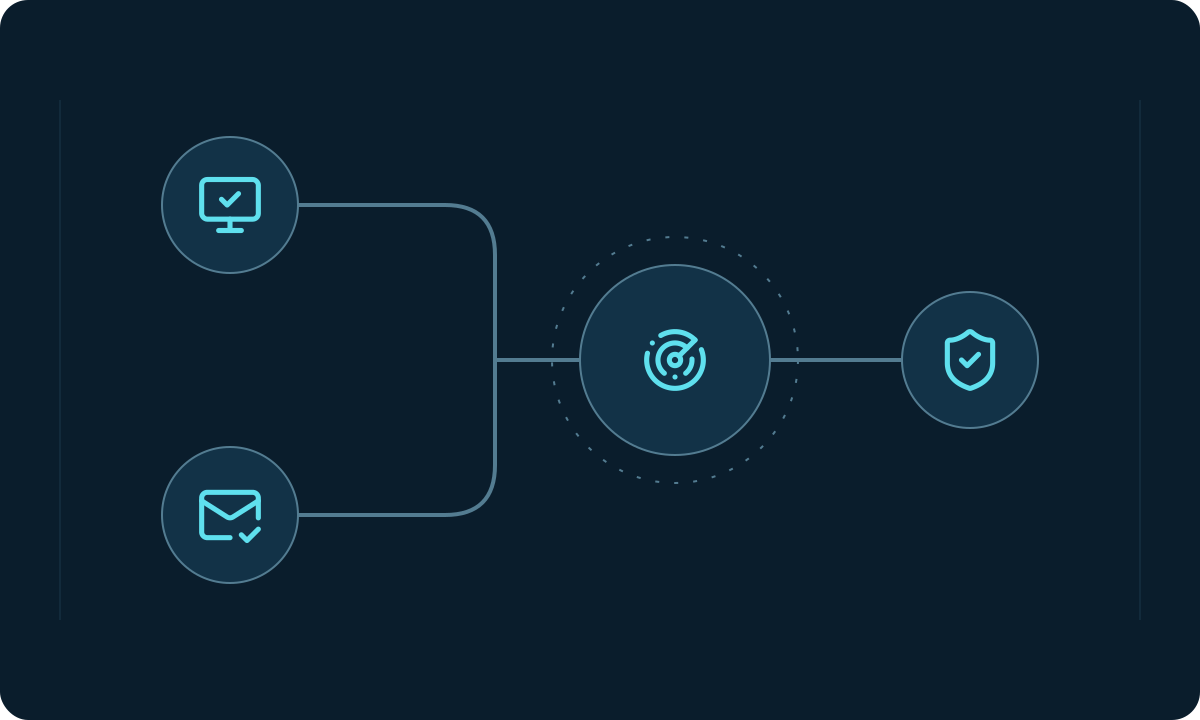
Managed Detection and Response connects security signals to investigation and agreed action. CyberXpert helps you define and operate an MDR service that fits your environment, so suspicious activity has a clear route from detection to decision.
Discuss MDR coverageWHO THIS HELPS
For organisations that have security tooling but limited capacity to investigate alerts, coordinate incidents or understand where detection coverage ends.
THE PROBLEM TO SOLVE
An alert is a signal, not a confirmed incident. Without useful telemetry, access to investigate and an agreed escalation route, even a well-configured product can leave your team unsure what to do next.
The engagement defines data-source coverage, investigation records, escalation rules, containment permissions and service reports. Material gaps and dependencies are recorded rather than hidden behind a dashboard.
We map critical systems and risks, validate the available signals, agree response playbooks and test the operational handover. Service reviews use investigation findings to improve coverage.
Confirmed issues feed into remediation and readiness work. Detection tuning and recurring reviews help reduce noise and keep the service aligned with changes in your estate.
Scope depends on the number and type of data sources, retention requirements, integrations, investigation depth, support hours and response authority. Existing licences may support some capabilities; additional licensing may be needed.
Your proposal sets out the deliverables, assumptions, exclusions and responsibilities before work begins. No fixed price or contractual inclusion is implied by this page.
A DEFINED ENGAGEMENT
01
Review of endpoint, identity and other agreed security data sources.
02
Detection use cases mapped to relevant business risks and available telemetry.
03
Alert triage, investigation and escalation within the contracted service boundary.
04
Containment playbooks with explicit authorisation and business-impact safeguards.
How is MDR different from monitoring?
Monitoring identifies and routes signals. MDR adds investigation and agreed response activity. The contract should make the boundary and response authority explicit.
Is SOC-as-a-Service a separate requirement?
A SOC describes an operating capability. It can form part of MDR delivery, but the buyer should assess actual coverage, investigation and response responsibilities rather than the label.
Who authorises containment when an alert is investigated?
Containment authority is agreed during service design. The scope should identify actions that can be taken under pre-agreed rules, actions requiring customer approval and the contacts responsible for decisions that could affect business services.
Which data sources can be included?
We review the relevant endpoint, identity and other available security telemetry against the agreed objectives. Coverage depends on supported integrations, permissions and licensing. A coverage record should identify sources that are unavailable or outside the service boundary.
What information should we expect from an investigation?
The agreed investigation record should explain the signal, evidence reviewed, assessment and actions taken or recommended. Escalation and reporting arrangements are defined in the service scope; an alert alone does not establish that a compromise has occurred.
LET’S DEFINE THE RIGHT SCOPE
Outline the systems and security tools you use, the alerts you need help investigating and your current escalation arrangements. We can assess coverage and define response authority before onboarding.
Managed Security →
Managed Endpoint Security →
Incident Response Retainer →